For every successor, taking over a family business is not merely a transfer of assets or leadership titles, but a profound journey of self-discovery. Many successors initially experience self-doubt and identity confusion. In addition to considering the practical question of “how to manage the business?” they also need to answer a fundamental question: “Who am I?” Am I merely an “inheritor” to the family business, or an“entrepreneur” capable of forging a new path?

|
Image source: ©千库网 |
DOU Junsheng, a professor at the School of Management at Zhejiang University, and his doctoral student LI Ganlin collaborated with GE Bingbing, a tenured assistant professor at Lancaster University in the UK, and conducted an in-depth exploratory study involving nine Chinese family businesses. This multi-case study focuses on the perspective of identity construction. The researchers analyzed how successors reflect on their growth experiences and consider the impact of their entrepreneurial parents in shaping their business identity.
|
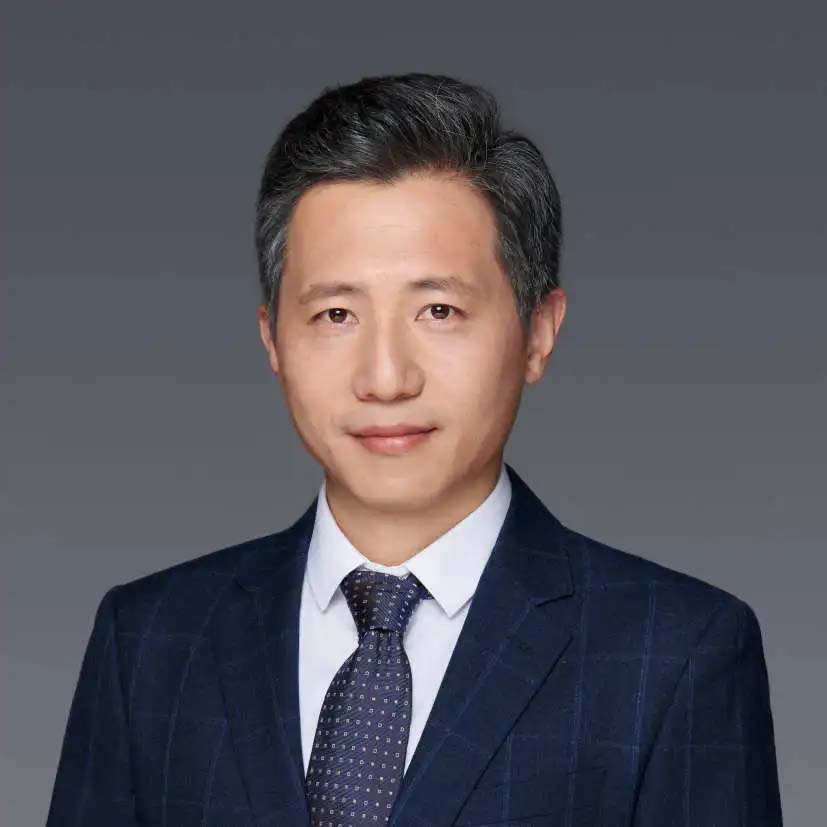
DOU Junsheng | 窦军生 School of Management, Zhejiang University |
||
|
|
||
|
|
|
Academic Background: Professor, doctoral supervisor, director of the Family Business Research Institute, and vice dean of the Entrepreneurship Academy at the ZJUSOM. Research areas: family business succession and intergenerational entrepreneurship, Confucian culture and family business innovation, family business goal system and time orientation. You can learn more about Prof. DOU Junsheng‘s academic background here |
|
LI Ganlin | 李甘霖 School of Management, Zhejiang University |
||
|
|
||
|
|
|
Academic Background: Doctoral student in Entrepreneurship Management at the ZJUSOM. Research areas: intergenerational entrepreneurship in family businesses, mentoring entrepreneurs, and entrepreneurial identity.
|
|
GE Bingbing Lancaster University (GB) |
||
|
|
||
|
|
|
Academic Background: Fellow (FHEA), The Higher Education Academy, UK Professional Standards Framework. Research areas: family business management, entrepreneurship, and strategy. You can learn more about GE Bingbing‘s academic background here |
The research team discovered that the key to successful intergenerational succession lies in whether successors can develop a clear “entrepreneurial identity,” and the process of establishing this identity largely depends on how they perceive and understand their parents‘ guidance methods. In this episode, let‘s follow Dou Junsheng‘s team‘s research and step into the world of “successors.”
|
|
01 | “Successors” in the Chinese Context |
Intergenerational interactions in Chinese family businesses are deeply influenced by Confucian culture, especially the concepts of filial piety and family harmony. Parents often play the roles of both manager and moral authority, and their guidance behavior exhibits a contradictory characteristic of “both support and control,” meaning that guidance is often accompanied by love and high expectations.
The study reveals the contradictions and tensions inherent in the shaping of entrepreneurial identity among successors within the unique context of Chinese culture. The interviewed successors generally felt this contradiction: on the one hand, they received support due to their parents‘ attention and investment; on the other hand, they bore the pressure of high expectations. However, the study found that this “push-pull” dynamic actually fostered their growth into more independent and entrepreneurial leaders.

|
Image source: ©千库网 |
Interestingly, the research team found that successors‘ interpretations of their parents‘ behavior were often more important than the behavior itself. The same behavior could be interpreted as support or pressure depending on the timing, personal confidence, and family interaction style. Some successors initially felt “pushed into the business,” but later reinterpreted their parents‘ strictness as expressions of care and long-term planning. Others recalled moments when their parents showed vulnerability - such as admitting mistakes or seeking advice - moments that helped them see themselves as contributors, not just bystanders. This highlights a key point for family business leaders: intention is not the same as influence. Guidance is not just about what is done, but also about how it is perceived and remembered.
|
02 | “Who am I?”: The identity confusion of the successor |
Research shows that most successors experience an “identity ambiguity” phase when they first join a family business. Many successors have mentioned that they were initially deeply mired in self-doubt, constantly questioning whether they were truly suited for the role of entrepreneur. They often describe themselves as “deserters,” “losers,” or “misfits,” filled with confusion and anxiety.
This feeling often stems from unique upbringing. One successor frankly admitted, “I was sent to boarding school when I was six years old because my mother was too busy with her business to take care of me. Later, I studied new media, which felt completely unrelated to my family‘s traditional manufacturing industry, as if I were living in two different worlds.”

|
Image source: ©千库网 |
After the reform and opening, the first generation of entrepreneurs struggled in the wave of the market economy, but their busy work often left them with no time to fully communicate with their children about the hardships and value of starting a business. This lack of intergenerational communication resulted in many successors lacking a deep understanding and emotional connection with their companies, laying the groundwork for later identity confusion.
However, over time, successors gradually develop into confident and self-aware leaders. This transformation is not merely achieved through learning management skills, but rather through a gradual process of establishing a family business identity. So, what parental guidance strategies can influence this process?
|
03 | Four guidance strategies: Catalysts for identity transformation |
The research team carefully listened to how successors interpreted their parents‘ various behaviors, which provided support, which held special significance, and which brought about fundamental change. The results showed that four parenting guidance strategies played a decisive role in the successors‘ perception of their entrepreneurial identity as it shifted from vague to clear.
01. Paving the way and building bridges, laying a solid foundation for successors.
This is a process where parents provide their successors with business resources, professional networks, and practical training. By introducing business partners, arranging departmental rotations, and providing professional training, parents help their children build the fundamentals of business management. The successors, in turn, experience the business world early on through observation, informal participation, and immersion in business-related conversations. This exposure builds their familiarity with and confidence in the family business. One successor recalled that his father deliberately introduced him to his professional circle; these early contacts allowed him to quickly build a network within the industry, “which would otherwise have taken years.”

|
Image source: ©千库网 |
02. Describe a vision and point out the direction for development to successors.
Under this strategy, parents help their children see the possibilities for themselves and the company‘s future by emphasizing industry potential, encouraging innovative exploration, and granting them autonomy in decision-making. As a result, successors feel continuous emotional support, encouragement, and trust from their parents, giving them greater confidence in their abilities. One father, upon the successful trial production of a product, simply patted his son on the shoulder and smiled approvingly - a small gesture that deeply inspired his son.

|
Image source: ©千库网 |
03. Connecting with history allows successors to draw wisdom from family experience.
Unlike formal knowledge transfer, this strategy helps successors understand the company‘s foundation and values by telling authentic entrepreneurial stories, family histories, and local cultural heritage. One mother successfully evoked her daughter‘s sense of belonging to the family by establishing a cultural park, which embodied the company‘s agricultural roots and local sentiments. “Only when the cultural park was built did the essence of this family business truly take root in my heart.”

|
Image source: ©千库网 |
04. Set an example by setting a role model for your successor.
Parents are often the closest role models for their children. Through their own behavior, they demonstrate professional ethics, social responsibility, and family values, subtly influencing the behavioral standards of their successors. For example, one father only sits on the front third of his chair during meetings, symbolizing responsibility and focus, and he requires his son to do the same. Another father from a family with a long history in the catering industry is accustomed to bowing at a 45-degree angle to express respect and humility to customers, teaching his children to “learn to squat and stand.”

|
Image source: ©千库网 |
|
04 | From cognition to behavior: The process of gradually clarifying identity |
As parental guidance deepens, the transformation of successors manifests on both cognitive and behavioral levels. Cognitively, they develop a clear mission, vision, and strategic direction, and proudly identify themselves as “young entrepreneurs.” Behaviorally, they actively participate in entrepreneurial communities, respect their parents‘ entrepreneurial achievements, uphold corporate traditions, and proactively assume social responsibility, thereby reinforcing their entrepreneurial identity.
Research shows that this identity shift not only affects personal growth but also directly relates to corporate innovation and transformation. Successors who successfully establish an entrepreneurial identity are more inclined to drive corporate transformation and upgrading, explore new business areas, and achieve intergenerational entrepreneurship. One successor said, “I used to think I was just fulfilling my father‘s dream. Now, it has become my own dream.” This dual shift in entrepreneurial discourse and behavior marks the true formation of an entrepreneurial identity.

|
Image source: ©千库网 |
“Our respondents often experienced complex emotions such as gratitude, anxiety, pride, and self-doubt during their upbringing. In fact, the role of parents extends beyond business guidance - it also includes emotional guidance,” the research team noted. Parents who recognize this emotional dimension are often able to develop a deeper level of trust with their successors. During the identity transition, the successor‘s “entrepreneurial” consciousness stems from the gradual internalization of their parents‘ values, expectations, and feedback. In many cases, the mentoring relationship evolves over time, shifting from top-down instructions to mutual respect and collaboration.
|
05 | Lesson: Passing down identity, not just assets |
Family businesses often aspire to longevity, but sustained success requires more than just asset transfer; it also demands the transmission of identity, values, and a belief in one‘s leadership abilities. This research suggests that through conscious guidance, successors can move from uncertainty to a sense of ownership - from asking, “Do I belong here?” to declaring, “I lead this business.”
As family businesses across Asia and the world face generational shifts, the question is not just “who will take over,” but also “who are they becoming in the process?” Entrepreneurial identity serves as a bridge between tradition and innovation, and a link between the established state of a business and its potential future development. Against this backdrop, this research offers important practical insights for family businesses.

|
Image source: ©千库网 |
For entrepreneurial parents, mentorship should begin early and proceed gradually; daily role modeling is just as important as formal planning; and successors should be given autonomy to shape rather than simply preserve family traditions. Identity will only become clear when successors feel they can shape the future, not just protect the past.
For successors, it‘s crucial to recognize the impact of their parents‘ guidance on their identity and consciously develop their own entrepreneurial identity. While parental guidance forms the foundation, successors need to reflect on their own strengths, aspirations, and values. Finding their passion and establishing credibility as an independent leader will help them build a sense of accomplishment that is truly their own, rather than living in their parents‘ shadow. After all, true entrepreneurial identity isn‘t about copying and pasting, but about “starting afresh” - beginning a new chapter.
- We thank Prof. DOU Junsheng and the research team for their valuable contribution to advancing the understanding of how parental mentoring strategies shape entrepreneurial identity in family businesses.
- You can read the original article in Chinese here